What a 2kW System Really Powers
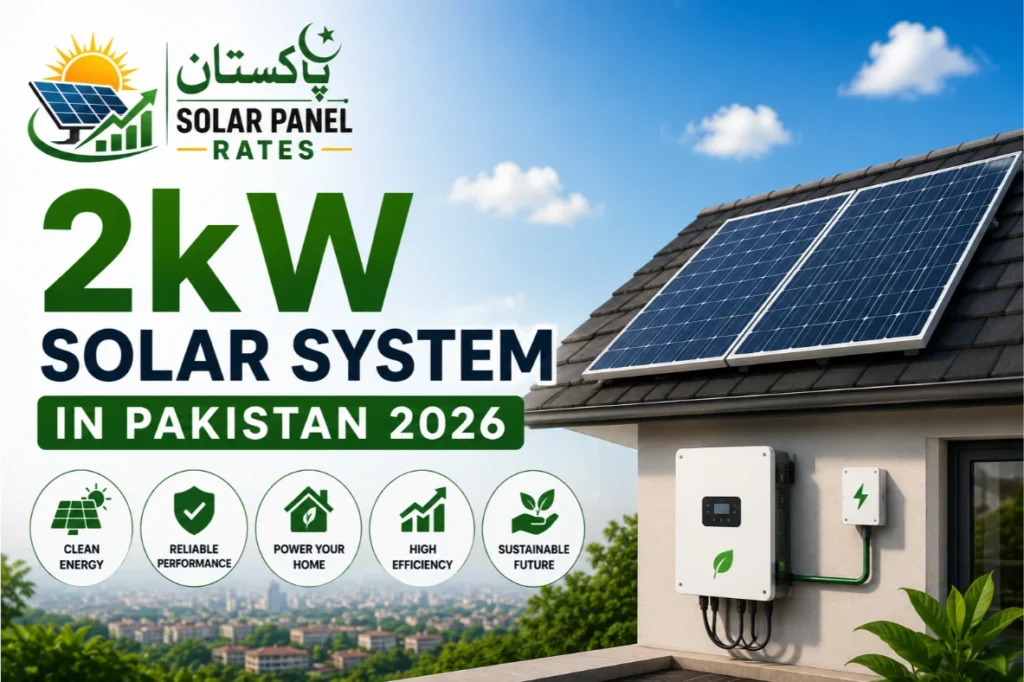
A 2 kW solar system is an entry-level setup – about four 550W panels – sized for small homes, a portion of a house, or load-shedding backup rather than full grid independence. On a clear Pakistani day it generates roughly 8-9 units (kWh), enough to run lights, fans, a TV, phone charging and a small refrigerator comfortably, but not an air conditioner. Most 2 kW installs are hybrid or off-grid with a small battery so the household keeps power during outages. It needs only about 10-11 square metres of roof and a single-phase inverter, making it the cheapest way onto solar – though many buyers soon wish they had sized up to cover an AC.
2kW Solar System Price in Pakistan 2026 – Entry Level Home Setup
2kW Solar System Price Breakdown 2026
| Component | Specification | Estimated Cost (PKR) |
|---|---|---|
| Solar Panels | 4 × 550W (LonGi/Jinko) | Rs. 55,000 – Rs. 75,000 |
| Hybrid Inverter | 2kW–2.5kW hybrid | Rs. 65,000 – Rs. 95,000 |
| Batteries | 4 × 150AH lead-acid (48V) or 2.5kWh lithium | Rs. 85,000 – Rs. 180,000 |
| Structure & Installation | Roof mount + cables + labour | Rs. 30,000 – Rs. 50,000 |
| Total (lead-acid batteries) | Rs. 235,000 – Rs. 295,000 | |
| Total (lithium batteries) | Rs. 295,000 – Rs. 400,000 |
What Loads Can a 2kW System Handle?
| Appliance | Power Draw | Can 2kW Handle? |
|---|---|---|
| LED Lights (×15) | 150W | ✅ Yes |
| Ceiling Fans (×4) | 300W | ✅ Yes |
| LED TV 43″ | 80W | ✅ Yes |
| Laptop + Chargers | 100W | ✅ Yes |
| 0.75-ton Inverter AC | 600W | ✅ Yes (limited hours) |
| 1-ton Inverter AC | 900W | ⚠️ Strains system |
| 1.5-ton Inverter AC | 1,400W | ❌ Too much |
Is a 2kW System Right for You?
- Small apartment or 2-room house with no or one small AC
- Monthly electricity bill is Rs. 5,000–15,000
- Budget is limited and you want to start small, expand later
- Small shop requiring lights, fans, and a POS/laptop
- You want solar but cannot afford a 5kW system right now
Frequently Asked Questions
🌞 Want to see bigger system options?
Compare our complete guides for 3kW, 5kW, and 6kW systems.
Sources & references
Tariff, net-metering, and policy details on this page draw on the following official sources. Rates change often, so confirm current figures with the relevant authority or a licensed installer before you decide.
- NEPRA — National Electric Power Regulatory Authority: electricity tariffs and the 2026 shift from net metering to net billing.
- AEDB — Alternative Energy Development Board: solar policy, installer standards, and net-metering guidance.
- Your local distribution company (DISCO) — for example LESCO, K-Electric, IESCO, MEPCO, PESCO or QESCO — for area-specific tariffs and the net-metering application process.