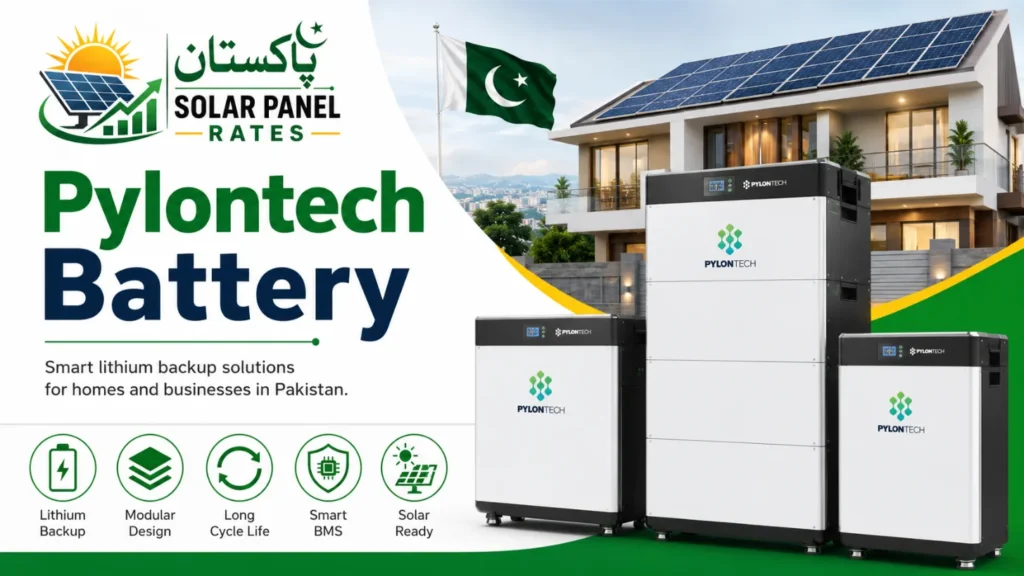
Pylontech battery price in Pakistan starts around Rs. 85,000 for the entry-level US2000C. Pylontech is the most popular lithium solar battery brand in Pakistan in 2026 — and for good reason. The Chinese manufacturer has earned a reputation for reliability, long cycle life, and seamless compatibility with virtually every hybrid inverter on the market. If you’re going solar in Pakistan and want lithium storage, Pylontech is the default choice for most installers.
Pylontech Battery Prices in Pakistan (2026)
| Model | Capacity | Voltage | Price (PKR) |
|---|---|---|---|
| Pylontech US2000C | 2.4 kWh (74Ah) | 48V | Rs. 85,000 – Rs. 100,000 |
| Pylontech US3000C | 3.5 kWh (100Ah) | 48V | Rs. 115,000 – Rs. 135,000 |
| Pylontech UP5000 | 4.8 kWh | 48V | Rs. 190,000 – Rs. 220,000 |
| Pylontech FORCE H1 | 7.1 kWh | 48V | Rs. 290,000 – Rs. 330,000 |
| Pylontech FORCE H2 | 10.65 kWh | 48V | Rs. 430,000 – Rs. 490,000 |
Prices updated June 2026. Actual market rates may vary ±5% by city and dealer.
Pylontech Battery Specifications
All Pylontech US and FORCE series batteries use LiFePO4 (Lithium Iron Phosphate) chemistry — the safest and most stable lithium technology available. Unlike NMC lithium batteries, LiFePO4 does not overheat or catch fire, making it ideal for Pakistan’s hot climate.
| Specification | US2000C | US3000C | FORCE H2 |
|---|---|---|---|
| Chemistry | LiFePO4 | LiFePO4 | LiFePO4 |
| Nominal Capacity | 74Ah / 2.4kWh | 100Ah / 3.5kWh | 10.65kWh |
| Cycle Life | 6,000+ cycles | 6,000+ cycles | 6,000+ cycles |
| DoD (Depth of Discharge) | 95% | 95% | 95% |
| Round-trip Efficiency | 95% | 95% | 96% |
| Operating Temperature | -10°C to 50°C | -10°C to 50°C | -10°C to 50°C |
| Communication | CAN / RS485 | CAN / RS485 | CAN / RS485 |
How Many Pylontech Batteries Do You Need?
For a 5kW hybrid solar system in Pakistan powering a home through 6–8 hours of load shedding:
- Light usage (fans, lights, small appliances): 2× US3000C = 7 kWh — costs Rs. 230,000–Rs. 270,000
- Medium usage (1 AC + fans + fridge): 2× UP5000 = 9.6 kWh — costs Rs. 300,000–Rs. 350,000
- Heavy usage (2 ACs + full home): 1× FORCE H2 = 10.65 kWh — costs Rs. 300,000–Rs. 340,000
Pylontech US series batteries can be stacked — you can start with 2 batteries and add more later as your budget allows. Maximum stack is 8 units for the US series.
Pylontech Inverter Compatibility in Pakistan
Pylontech batteries are plug-and-play compatible with most hybrid inverters sold in Pakistan:
- Growatt – SPF and SPH series (most common pairing in Pakistan)
- Solis – S6-EH1P and S6-EH3P hybrid series
- GoodWe – ES and ET series
- Deye – All hybrid models
- Sungrow – SH series
- Victron – MultiPlus and Quattro series
The CAN/RS485 communication port enables automatic BMS communication — your inverter and battery talk to each other to optimize charging and prevent overcharge or over-discharge.
Pylontech Warranty in Pakistan
Pylontech offers a 10-year warranty on all US and FORCE series batteries, guaranteeing at least 80% capacity retention at the end of the warranty period. For warranty to be valid in Pakistan, ensure you purchase from an authorized Pylontech distributor and receive the original warranty card. Ask your dealer for the distributor authorization certificate before buying.
Why Pylontech Dominates Pakistan’s Lithium Market
Pylontech’s popularity in Pakistan comes down to three factors: wide availability (stocked by most reputable solar dealers in Lahore, Karachi, and Islamabad), proven track record (hundreds of thousands of units installed globally), and straightforward inverter compatibility. While premium brands like BYD and Huawei LUNA offer similar performance, Pylontech consistently delivers the best balance of price and reliability for residential solar in Pakistan.
Use our solar price calculator to estimate total system cost including Pylontech batteries, or check our solar batteries guide to compare all lithium brands.
Sources & references
Tariff, net-metering, and policy details on this page draw on the following official sources. Rates change often, so confirm current figures with the relevant authority or a licensed installer before you decide.
- NEPRA — National Electric Power Regulatory Authority: electricity tariffs and the 2026 shift from net metering to net billing.
- AEDB — Alternative Energy Development Board: solar policy, installer standards, and net-metering guidance.
- Your local distribution company (DISCO) — for example LESCO, K-Electric, IESCO, MEPCO, PESCO or QESCO — for area-specific tariffs and the net-metering application process.