Dyness Solar Solutions Price in Pakistan 2026 – Battery & Inverter Pairings Guide
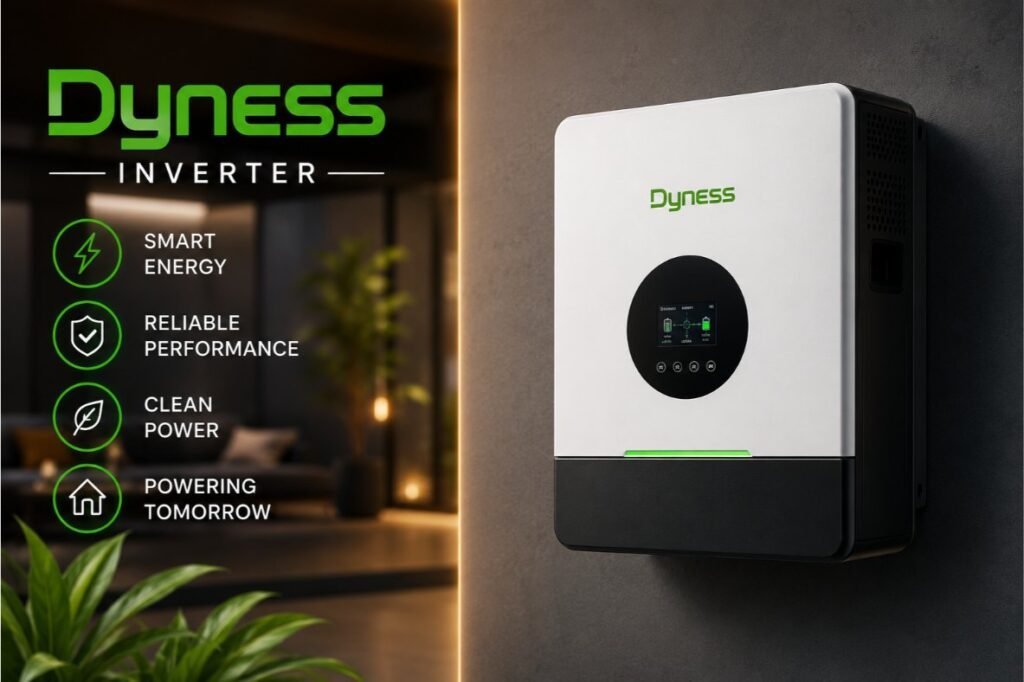
Dyness is a Chinese battery technology company focused on LiFePO4 (lithium iron phosphate) energy storage — in Pakistan, Dyness is primarily known for its wall-mounted and rack-mounted battery systems, not standalone inverters. This page covers Dyness battery pricing in Pakistan, recommended inverter pairings, and how to build a complete Dyness-based solar storage system.
Dyness Battery Prices in Pakistan 2026
| Model | Capacity | Type | Price (PKR) |
|---|---|---|---|
| Dyness B4850 | 4.8 kWh | Wall-mounted LiFePO4 | Rs. 180,000 – Rs. 220,000 |
| Dyness DL5.0C | 5.12 kWh | Wall-mounted LiFePO4 | Rs. 250,000 – Rs. 270,000 |
| Dyness Tower T10 | 9.6 kWh | Rack-mounted LiFePO4 | Rs. 450,000 – Rs. 510,000 |
💡 Most popular model: The Dyness DL5.0C (5.12kWh) at Rs. 200,000–255,000 is the most widely sold Dyness battery in Pakistan — it pairs with any standard 6kW–8kW hybrid inverter and covers 8–12 hours of a medium Pakistani home’s night load.
Dyness DL5.0C — Key Specifications
| Specification | Dyness DL5.0C |
|---|---|
| Capacity | 5.12 kWh |
| Chemistry | LiFePO4 (Lithium Iron Phosphate) |
| Nominal Voltage | 51.2V |
| Max Charge Current | 50A |
| Max Discharge Current | 50A |
| Cycle Life | 6,000+ cycles |
| Communication | CAN / RS-485 |
| IP Rating | IP55 |
| Warranty | 10 years (capacity guarantee) |
| Mounting | Wall-mounted |
Recommended Inverter Pairings for Dyness Batteries
| Inverter | Capacity | Compatibility | Approx Price |
|---|---|---|---|
| Growatt SPF 6000ES | 6 kW | ✅ CAN supported | Rs. 145,000–165,000 |
| Deye SUN-6K-SG03LP1 | 6 kW | ✅ CAN supported | Rs. 165,000–185,000 |
| GoodWe GW6000-ES | 6 kW | ✅ CAN supported | Rs. 175,000–195,000 |
| Knox Krypton 6kW | 6 kW | ✅ CAN/RS-485 | Rs. 155,000–175,000 |
| Fronus PV 7200 | 6.2 kW | ✅ Compatible | Rs. 107,000–145,000 |
Dyness Battery Pros & Cons
Why Buyers Choose Dyness
- 10-year capacity warranty — among the longest battery warranties available in Pakistan
- 6,000+ cycle life — at 1 cycle/day, that’s 16+ years of usable life
- IP55 rated — suitable for indoor and semi-outdoor installations
- CAN/RS-485 communication — seamless BMS integration with most major inverter brands
- Globally proven — Dyness batteries are used across Europe, Australia, and Asia
- DL5.0C and Tower T10 are stackable — add more batteries as your energy needs grow
⚠️ Limitations to Know: Dyness does not manufacture solar inverters — you must purchase an inverter separately. Dyness batteries are priced at a premium over local Pakistani lithium brands (Knox, CoreTECH, Crown). Confirm CAN communication compatibility between your Dyness model and inverter before purchase.
How to Build a Complete Dyness Solar System
- Choose your inverter first — select a 6kW or 8kW hybrid inverter with CAN/RS-485 battery communication. Growatt, Deye, GoodWe, and Knox are all reliable choices compatible with Dyness.
- Match battery capacity to your night load — for 8 hours of backup on a 2-AC home, aim for 25–40 kWh. Two DL5.0C batteries (10.24 kWh) cover 2–3 hours of heavy load or 6–8 hours of moderate load.
- Choose your panel array — for a 6kW system, pair with 10–14 panels (480W–550W each). This generates enough to run daytime loads and recharge the Dyness battery for nighttime use.
- Configure BMS communication — set the inverter’s battery protocol to “Dyness” or “Pylon” in the inverter settings. Your installer handles this during commissioning.
📊 Dyness vs local lithium batteries: Dyness DL5.0C (5.12kWh) at Rs. 200,000–255,000 is priced higher than comparable Pakistani-brand lithium batteries (Knox, CoreTECH, Crown — typically Rs. 150,000–200,000 for 5kWh). However, Dyness offers a 10-year warranty vs 3–5 years for local brands — worth the premium for buyers prioritizing long-term reliability.
Frequently Asked Questions
❓ Does Dyness make solar inverters in Pakistan?
No — Dyness is a battery storage company, not an inverter manufacturer. In Pakistan, Dyness is available as a standalone lithium battery that pairs with third-party inverters. Popular inverter pairings include Growatt, Deye, GoodWe, and Knox.
❓ What is the price of Dyness battery in Pakistan 2026?
The Dyness DL5.0C (5.12kWh) is priced at Rs. 200,000–255,000, the B4850 (4.8kWh) at Rs. 180,000–220,000, and the Tower T10 (9.6kWh) at Rs. 350,000–430,000 in Pakistan as of 2026.
❓ Is Dyness battery compatible with Growatt or Deye inverters?
Yes. Dyness batteries use CAN/RS-485 BMS communication, supported by all major hybrid inverter brands in Pakistan including Growatt, Deye, GoodWe, Solis, Knox, and Fronus. Set the battery protocol to “Dyness” or “Pylon” during installation.
❓ How many Dyness batteries do I need for a 2-AC home in Pakistan?
Two Dyness DL5.0C batteries (10.24 kWh total) provide approximately 4–6 hours of full-load backup or 8–10 hours of moderate backup. For 10–12 hours, consider three DL5.0C batteries or one Tower T10 (9.6kWh) paired with a DL5.0C.
🔋 Building a Dyness solar storage system?
Check today’s solar prices to plan your complete setup.
Today’s solar panel rates → | All inverter brands → | All solar battery prices →
Also Compare — Related Solar Inverters & Batteries in Pakistan
Looking at Dyness? You might also want to compare these popular options available in Pakistan:
- Deye Inverter Price in Pakistan 2026 — Most popular hybrid inverter brand; pairs excellently with Dyness batteries
- CoreTECH Inverter Price in Pakistan 2026 — Budget-friendly IP66-rated hybrid inverter; compatible with Dyness LiFePO4
- Huawei LUNA2000 Battery Price in Pakistan — Premium alternative to Dyness for high-end solar setups
- Felicity Lithium Battery Price in Pakistan — More affordable lithium battery option vs Dyness
- All Solar Battery Prices in Pakistan 2026 — Full comparison of lithium battery brands
Sources & references
Tariff, net-metering, and policy details on this page draw on the following official sources. Rates change often, so confirm current figures with the relevant authority or a licensed installer before you decide.
- NEPRA — National Electric Power Regulatory Authority: electricity tariffs and the 2026 shift from net metering to net billing.
- AEDB — Alternative Energy Development Board: solar policy, installer standards, and net-metering guidance.
- Your local distribution company (DISCO) — for example LESCO, K-Electric, IESCO, MEPCO, PESCO or QESCO — for area-specific tariffs and the net-metering application process.