
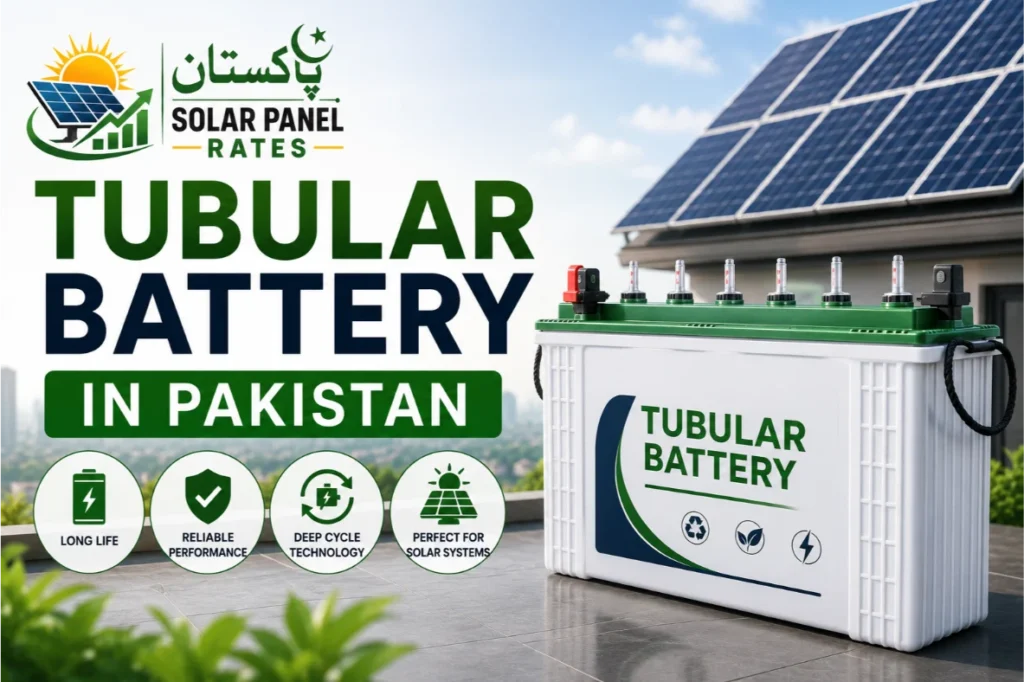
Tubular Battery Price in Pakistan 2026 – Deep Cycle Solar & UPS Batteries
Tubular batteries are a premium category of lead-acid battery with a distinctive tube-shaped positive plate that gives them significantly longer cycle life than standard flat-plate batteries. In Pakistan, tubular batteries are sold by both local brands (AGS, Phoenix, Osaka) and imported brands (Exide, Narada, Ritar). They are the best lead-acid option for solar backup — lasting 5–7 years vs 2–3 years for standard flat-plate UPS batteries.
Tubular Battery Prices in Pakistan 2026
| Brand / Model | Capacity | Type | Price (PKR) |
|---|---|---|---|
| Generic Tubular 100AH | 100 AH | Tubular Flooded | Rs. 28,000 – Rs. 35,000 |
| Generic Tubular 150AH | 150 AH | Tubular Flooded | Rs. 40,000 – Rs. 48,000 |
| Generic Tubular 200AH | 200 AH | Tubular Flooded | Rs. 52,000 – Rs. 62,000 |
| Osaka TP-200 (Tubular) | ~160 AH | Tubular Plate | Rs. 36,000 – Rs. 42,000 |
| Narada Tubular 200AH | 200 AH | Tubular (Imported) | Rs. 65,000 – Rs. 80,000 |
| Ritar Tubular 200AH | 200 AH | Tubular (Imported) | Rs. 60,000 – Rs. 75,000 |
💡 Why tubular? Tubular batteries have 1,200–1,500 cycles at 50% DoD vs 500–800 for flat-plate batteries. For a solar system running 1 cycle/day, that’s 3–4 years for flat-plate vs 5–7 years for tubular — nearly double the life for about 20–30% more cost.
Tubular vs Flat-Plate vs Lithium — Comparison
| Battery Type | Cycle Life | Price (150AH) | Maintenance | Best For |
|---|---|---|---|---|
| Flat-plate Lead-Acid | 500–800 cycles | Rs. 35,000–45,000 | Monthly | Budget UPS backup |
| Tubular Lead-Acid | 1,200–1,500 cycles | Rs. 40,000–55,000 | Monthly | Solar + UPS backup |
| LiFePO4 Lithium | 3,000–6,000 cycles | Rs. 150,000–200,000 | None | Best solar choice |
Why Buyers Choose Tubular Batteries
- 2× longer cycle life than standard flat-plate batteries — better ROI for solar
- Handle deeper discharges without damage — ideal for off-grid and heavy backup use
- Better performance in high-temperature environments — important in Pakistan summers
- Still significantly cheaper upfront than lithium alternatives
⚠️ Still require monthly maintenance: Tubular batteries are flooded lead-acid — they require monthly distilled water top-ups. Neglecting maintenance drastically shortens life. If you want zero-maintenance, lithium (LiFePO4) is the only option.
Which Tubular Battery Is Right for You?
- 1 AC solar backup (6–8 hours) — Four 150AH tubular batteries in 48V bank = 7.2kWh usable. Adequate for an inverter AC through a full load shedding night.
- Off-grid rural home — Tubular 200AH batteries in large banks. Size for 2 days of autonomy. Tubular handles deep cycling better than flat-plate.
- Budget, but want longer life than flat-plate — Local brand tubular (Osaka TP, AGS Tubular) at Rs. 36,000–48,000 per battery. Best mid-range lead-acid option.
- Premium, want imported quality — Narada or Ritar tubular imported batteries. Higher price but better manufacturing consistency.
📊 Tubular in 2026 vs lithium: With LiFePO4 prices falling to Rs. 30,000–40,000/kWh in Pakistan, tubular batteries are losing their economic advantage for new solar installations. Tubular remains best for: off-grid setups where lithium’s BMS has limited compatibility; buyers who cannot afford lithium upfront; and existing systems being expanded.
Frequently Asked Questions
❓ What is a tubular battery and why is it better for solar?
A tubular battery has cylindrical tube-shaped positive plates (gauntlet plates) instead of flat grid plates. The tubes hold the active material more securely, resisting shedding during cycling. This gives tubular batteries 2× the cycle life of flat-plate batteries — making them significantly better for solar applications where batteries cycle daily.
❓ How long does a tubular battery last with solar in Pakistan?
With proper monthly maintenance (distilled water top-ups, controlled charging via MPPT), tubular batteries in solar applications last 5–7 years in Pakistan’s climate. Without maintenance, expect 2–3 years. Compare to LiFePO4 lithium which lasts 10–15 years maintenance-free.
❓ Is a tubular battery better than a lithium battery for solar?
No — lithium (LiFePO4) is better than tubular for solar in almost every metric: longer life (6,000 cycles vs 1,500), zero maintenance, higher depth of discharge (90% vs 50%), and better temperature performance. Tubular wins only on upfront cost. Over 10 years, lithium is typically cheaper overall.
❓ Which brand of tubular battery is best in Pakistan?
For local brands, Osaka TP-Series and AGS Tubular are the most widely available. For imported, Narada and Ritar are well-regarded options. All require monthly maintenance regardless of brand. If budget allows, LiFePO4 from Knox, CoreTECH, or Fronus is a better long-term choice.
🔋 Ready to go lithium?
Compare Pakistan’s LiFePO4 lithium batteries — no maintenance, 3× longer life.
Sources & references
Tariff, net-metering, and policy details on this page draw on the following official sources. Rates change often, so confirm current figures with the relevant authority or a licensed installer before you decide.
- NEPRA — National Electric Power Regulatory Authority: electricity tariffs and the 2026 shift from net metering to net billing.
- AEDB — Alternative Energy Development Board: solar policy, installer standards, and net-metering guidance.
- Your local distribution company (DISCO) — for example LESCO, K-Electric, IESCO, MEPCO, PESCO or QESCO — for area-specific tariffs and the net-metering application process.