Bifacial vs Monofacial Solar Panels Pakistan 2026 — Is Bifacial Worth It?
Bifacial vs Monofacial — Key Differences
| Factor | Monofacial | Bifacial |
|---|---|---|
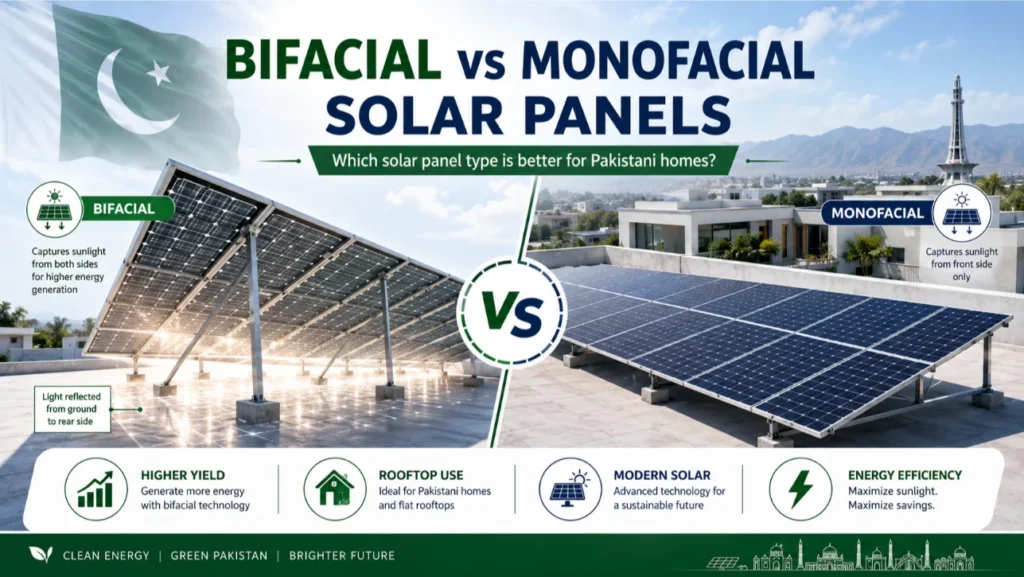
| Power Generation | Front surface only | Front + rear surface |
| Rear Power Gain | — | 5–30% extra (varies by install) |
| Typical Rooftop Rear Gain | — | 5–10% additional output |
| Ground-Mount Rear Gain | — | 15–30% additional output |
| Glass Construction | Front glass + opaque backsheet | Dual glass (front + rear transparent) |
| Weight | Lighter | Slightly heavier (dual glass) |
| Durability | Standard | More durable (dual glass) |
| Price Premium | — | Rs. 3–8 per watt more |
| Warranty | Standard | Often longer (dual glass protects cells) |
The Pakistan Rooftop Reality
This is where honest advice matters. Bifacial panels are marketed with impressive rear gain numbers — sometimes up to 30%. But those numbers apply to:
- Ground-mounted systems elevated 50–100cm above reflective surfaces
- Open-field solar farms with light-colored ground below panels
- Elevated racking systems with clear space beneath panels
When Bifacial Is Worth It in Pakistan
- Ground-mounted systems on farms or open land — elevated panels above sand or light soil can achieve 15–25% rear gain — bifacial is highly valuable here
- Elevated rooftop racking (30+ cm clearance) — if panels are raised off the roof on elevated mounting, rear gain improves to 8–15%
- White or light-colored rooftop surface — heat-reflective white paint or tiles below bifacial panels significantly improves rear yield
- Vertical/facade installations — buildings with south-facing glass facade installations see excellent bifacial gains from both direct and reflected light
When to Stick with Monofacial
- Standard flat rooftop flush-mount installation (dark concrete or tiles)
- Roof area is small — using higher-efficiency bifacial panels makes sense, but the bifacial rear gain is minimal in this configuration
- Budget priority — save Rs. 20,000–50,000 on a 6kW system and spend it on better inverter or batteries
The Dual-Glass Durability Advantage
Even if the bifacial rear gain is modest on your rooftop, bifacial panels have one underrated advantage in Pakistan: dual glass construction. Both front and rear surfaces use tempered glass, replacing the plastic backsheet of monofacial panels. In Pakistan’s conditions — extreme heat, UV, monsoon, and occasional hail — dual glass is more durable and resistant to humidity and UV degradation. This alone can justify the small price premium for buyers planning to keep panels for 20+ years.
Verdict
| Your Installation | Bifacial Worth It? |
|---|---|
| Flat concrete rooftop, low tilt | Marginal — rear gain 3–7% |
| Elevated rooftop with light surface | Yes — rear gain 8–15% |
| Ground mount on farm/land | Strongly yes — rear gain 15–25% |
| Buying for durability (dual glass) | Yes — worth the premium |
| Summary for most Pakistani buyers | ✅ Bifacial is good, but real rear gain is modest on typical rooftops — choose based on dual-glass durability and technology (TOPCon bifacial = current best) |
Frequently Asked Questions
☀️ Compare solar panel prices in Pakistan
Longi Hi-MO X6 prices → | Jinko Tiger Neo prices → | All panel brands →
Sources & references
Tariff, net-metering, and policy details on this page draw on the following official sources. Rates change often, so confirm current figures with the relevant authority or a licensed installer before you decide.
- NEPRA — National Electric Power Regulatory Authority: electricity tariffs and the 2026 shift from net metering to net billing.
- AEDB — Alternative Energy Development Board: solar policy, installer standards, and net-metering guidance.
- Your local distribution company (DISCO) — for example LESCO, K-Electric, IESCO, MEPCO, PESCO or QESCO — for area-specific tariffs and the net-metering application process.