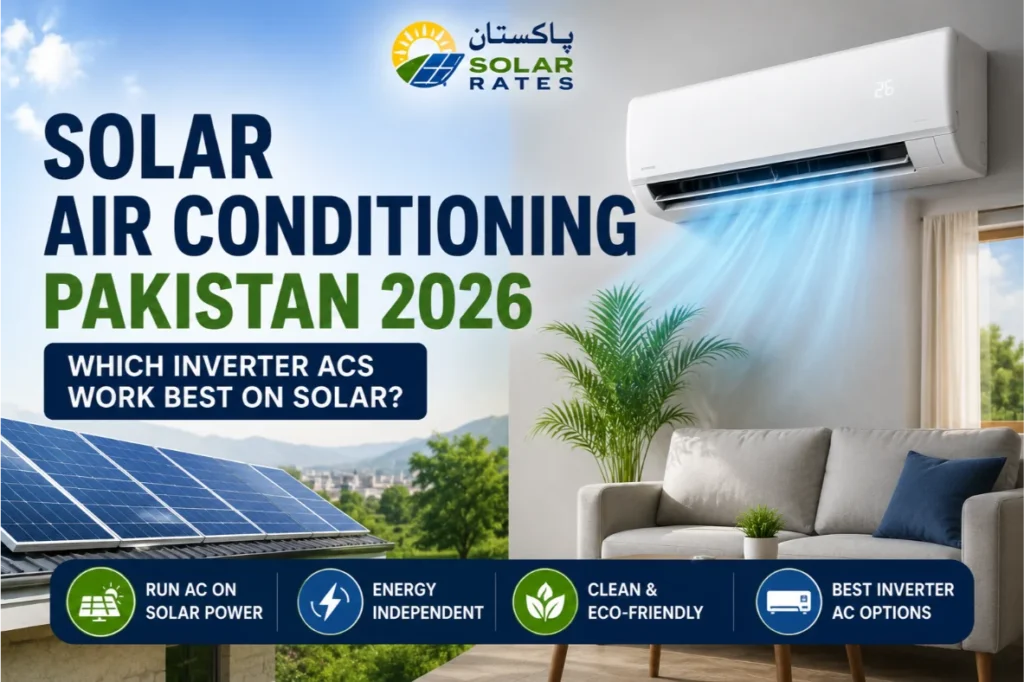
Solar Air Conditioning Pakistan 2026 — Which Inverter ACs Work Best on Solar?
Why Inverter AC Is Essential for Solar
Non-inverter ACs have a fixed-speed compressor that starts and stops at full power — drawing 3–5× the running current at startup (inrush current). This startup surge requires a much larger inverter to handle the peak load. Inverter ACs have variable-speed compressors that ramp up gradually, maintaining near-constant current draw with no startup surge.
| AC Type | Running Power | Startup Surge | Solar Inverter Needed |
|---|---|---|---|
| Non-inverter 1.5-ton | 1,800W | 5,000–7,000W surge | 6–8kW minimum |
| Inverter 1.5-ton | 1,000–1,400W running | Minimal — gradual ramp | 3–5kW handles comfortably |
Best Inverter AC Brands for Solar in Pakistan (2026)
| Brand | Model | Rated Power (1.5T) | ISEER Rating | Solar Compatibility |
|---|---|---|---|---|
| Gree | Fairy / Pular series | 1,250W | 4.5–5.2 | Excellent |
| Haier | Arctic / DC Inverter | 1,300W | 4.2–5.0 | Excellent |
| Dawlance | Inverter Plus series | 1,200W | 4.0–4.8 | Excellent |
| Mitsubishi | MSZ series | 1,100W | 5.5+ | Excellent (premium) |
| Daikin | FTKF series | 1,150W | 5.2–5.8 | Excellent (premium) |
| Orient | Ultron Inverter | 1,350W | 4.0–4.5 | Good |
How Many Solar Panels Per AC?
A rule of thumb for sizing:
- 1.5-ton inverter AC running 8 hours/day needs approximately 10–12 × 550W panels (5.5–6.6 kW) just to power that one AC plus basic home loads
- 2 ACs running simultaneously require an 8–10 kW system for comfortable operation with headroom
- 3 ACs need a 12–15 kW system — consider a 3-phase setup
DC Inverter ACs — The Solar-Optimised Option
Some brands offer solar-specific DC inverter ACs that can run directly from DC power from solar panels (without going through an AC inverter) — reducing conversion losses. Gree and a few other brands market “solar ACs” in Pakistan. These are most cost-effective for off-grid setups without a full hybrid inverter system.
Frequently Asked Questions
⚡ Size your solar system for AC loads
Sources & references
Tariff, net-metering, and policy details on this page draw on the following official sources. Rates change often, so confirm current figures with the relevant authority or a licensed installer before you decide.
- NEPRA — National Electric Power Regulatory Authority: electricity tariffs and the 2026 shift from net metering to net billing.
- AEDB — Alternative Energy Development Board: solar policy, installer standards, and net-metering guidance.
- Your local distribution company (DISCO) — for example LESCO, K-Electric, IESCO, MEPCO, PESCO or QESCO — for area-specific tariffs and the net-metering application process.