Solar Panel Maintenance Tips Pakistan — Complete Care Guide 2026
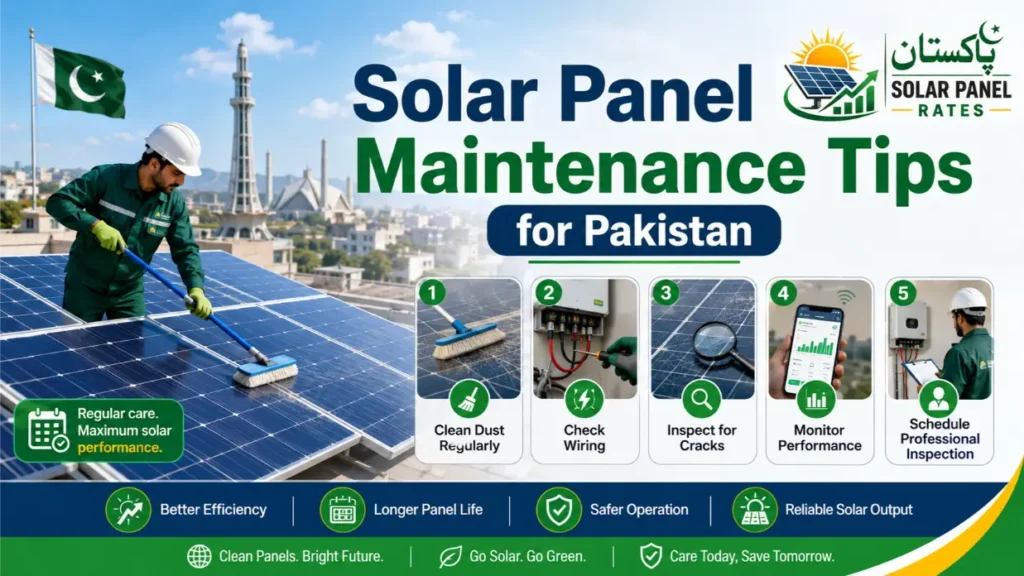
Solar panels are largely maintenance-free, but Pakistan’s unique climate — intense heat, dust storms, monsoon rains, and bird activity — means a few simple maintenance habits can add 5–10% more annual generation and extend your system’s life by years.
How Often Should You Clean Solar Panels in Pakistan?
Dust is the biggest performance killer in Pakistan. A layer of dust reduces output by 10–30% in drier months. Here’s the recommended cleaning schedule:
| Season | Cleaning Frequency | Reason |
|---|---|---|
| Winter (Nov–Feb) | Every 2–3 weeks | Dry season, dust accumulation |
| Spring (Mar–May) | Weekly | Dust storms (andhi), pollen |
| Monsoon (Jul–Sep) | After each rain + every 2 weeks | Mud spots from rain splatter |
| Post-monsoon (Oct) | Every 2 weeks | Crop residue dust in Punjab |
How to Clean Solar Panels Safely
- Clean early morning or evening — Never clean hot panels in midday sun. Thermal shock from cold water on hot glass can cause micro-cracks.
- Use soft water and a soft brush/cloth — Hard water (common in Lahore, Karachi) leaves calcium deposits. Use filtered or RO water if possible.
- Rinse thoroughly — Soap residue attracts more dust. If using mild soap, rinse with plenty of clean water afterward.
- Never use abrasive materials — Steel wool, harsh scrubbers, or high-pressure washers (above 20 bar) can scratch the anti-reflective coating permanently.
- Check for bird droppings — Bird droppings cause “hot spots” that can permanently damage cells. Remove them immediately with a damp cloth.
Monsoon Season Care
- Check all mounting bolts and brackets before monsoon — wind speeds up to 100+ km/h during storms can loosen poorly secured panels
- Inspect junction boxes and cable connectors for water ingress (look for discoloration or corrosion)
- Ensure earthing and lightning protection is intact
- Clean panels after each heavy rain — rain water in Pakistan carries dust and pollutants that leave deposits when dried
- Check inverter ventilation is clear and not blocked by debris
Heat Management (Pakistan Summers)
Solar panels lose efficiency in extreme heat — typically 0.29–0.45% per °C above 25°C. In Pakistani summers (45–50°C ambient temperature), panels can reach 70–80°C, causing a 15–25% output reduction.
- Ensure 10–15cm clearance between panels and roof surface for air circulation
- Do not block airflow underneath panels with debris or storage items
- Keep panels clean — dirty panels run hotter than clean ones
Inverter Maintenance
- Clean the inverter’s air filter/vents every 3–6 months
- Ensure the inverter is installed in a shaded location — direct sun can cause overheating
- Check the display or app for any error codes monthly
- Do not install the inverter in enclosed rooms without ventilation
Battery Maintenance (LiFePO4)
- Keep batteries in a cool, ventilated space (ideally under 35°C)
- Never block the battery’s ventilation slots
- Check the BMS status light monthly — green means normal
- Avoid letting the battery drop below 10% state of charge repeatedly
📊 Impact of regular cleaning: A clean solar system in Lahore generates approximately 10–15% more energy annually than a neglected one. For a 5kW system producing 600 units/month clean, a dirty system produces 510–540 units — costing you Rs 3,600–5,400 per month in lost savings.
Frequently Asked Questions
❓ How often should I clean solar panels in Pakistan?
In most Pakistani cities, clean your solar panels every 1–2 weeks during dry, dusty seasons (winter and spring) and after each rain during monsoon. In dustier areas like Multan, Faisalabad, or near industrial zones, weekly cleaning is recommended.
❓ Can I use tap water to clean solar panels in Pakistan?
Tap water is acceptable but RO or filtered water is better. Pakistan’s tap water has high mineral content that leaves white calcium deposits when it dries, reducing panel efficiency. If using tap water, buff dry with a clean microfiber cloth.
❓ Do solar panels need annual servicing in Pakistan?
A professional annual inspection is recommended — checking mounting integrity, connections, inverter health, and performance data. Most installers offer annual maintenance contracts for Rs 5,000–15,000.
Planning your solar system?Check our Solar Panel Prices and Inverter Prices before you buy.
Sources & references
Tariff, net-metering, and policy details on this page draw on the following official sources. Rates change often, so confirm current figures with the relevant authority or a licensed installer before you decide.
- NEPRA — National Electric Power Regulatory Authority: electricity tariffs and the 2026 shift from net metering to net billing.
- AEDB — Alternative Energy Development Board: solar policy, installer standards, and net-metering guidance.
- Your local distribution company (DISCO) — for example LESCO, K-Electric, IESCO, MEPCO, PESCO or QESCO — for area-specific tariffs and the net-metering application process.