
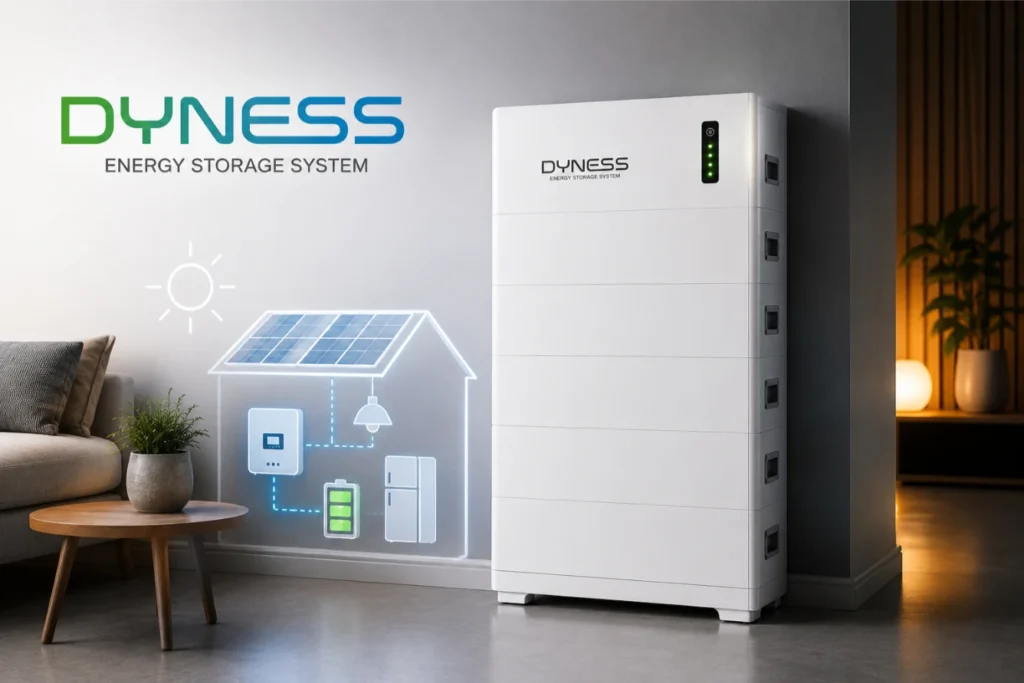
Dyness is a dedicated lithium battery manufacturer from China that has emerged as one of the fastest-growing solar storage brands in Pakistan. Known for their modular Tower series and compact PowerBox, Dyness batteries offer strong performance, attractive pricing, and wide inverter compatibility — making them a popular mid-range choice for Pakistani homes going solar in 2026.
Dyness Battery Price in Pakistan (2026)
| Model | Capacity | Voltage | Price (PKR) |
|---|---|---|---|
| Dyness PowerBox B5 | 4.8 kWh | 48V | Rs. 180,000 – Rs. 220,000 |
| Dyness PowerBox B10 | 9.6 kWh | 48V | Rs. 440,000 – Rs. 500,000 |
| Dyness Tower T5 | 4.8 kWh | 48V | Rs. 190,000 – Rs. 230,000 |
| Dyness Tower T10 | 9.6 kWh | 48V | Rs. 450,000 – Rs. 510,000 |
| Dyness Tower T15 | 14.4 kWh | 48V | Rs. 650,000 – Rs. 730,000 |
Prices updated August 2026. Tower series is modular and wall-mountable.
Dyness Battery Specifications
| Specification | PowerBox B5 / Tower T5 |
|---|---|
| Chemistry | LiFePO4 |
| Cycle Life | 6,000 cycles at 80% DoD |
| DoD | 90% |
| Round-trip Efficiency | ≥95% |
| Operating Temperature | -10°C to 50°C |
| IP Rating | IP55 |
| Communication | CAN / RS485 |
| Max Parallel Units | 8 units (Tower series) |
| Warranty | 10 years |
PowerBox vs Tower – Which Dyness Model for Pakistan?
The PowerBox is a conventional cabinet-style battery — compact, floor-standing, and cost-effective. The Tower series is modular and wall-mounted, giving a cleaner installation and easier expansion. Both use identical LiFePO4 cells and BMS electronics; the difference is purely form factor.
For Pakistan’s residential market, the PowerBox B10 (9.6 kWh) is the sweet spot — enough storage for an 8-hour load-shedding period running a mid-sized home, at a price Rs. 30,000–Rs. 50,000 below comparable Pylontech capacity.
Dyness Inverter Compatibility in Pakistan
Dyness batteries communicate via CAN/RS485 and are compatible with: Growatt SPH/SPF, Deye hybrid, Solis S6-EH, GoodWe ES/ET, Sungrow SH, Victron MultiPlus-II. For most inverters, a pre-set Dyness profile is available in the inverter’s battery settings menu — no custom parameter entry required.
Dyness 10-Year Warranty
Dyness provides a 10-year manufacturer warranty on all Tower and PowerBox series batteries, guaranteeing 70% capacity retention at year 10. Warranty claims in Pakistan are handled through authorized distributors. Always verify your dealer is an authorized Dyness reseller before purchasing.
Compare Dyness with other lithium brands on our solar batteries page. Use the price calculator for a full system estimate.
Dyness Battery Backup Time by Model
Dyness batteries are 48V-class and pair with any standard 48V hybrid inverter. The table below shows the approximate runtime of each model at a steady 1kW household load. Both the PowerBox and Tower series are modular, so you can stack units to increase capacity.
| Dyness Model | Capacity | Usable Energy | Approx. Backup @ 1kW |
|---|---|---|---|
| PowerBox B5 / Tower T5 | 4.8 kWh | ~4.6 kWh | ~4–4.5 hours |
| PowerBox B10 / Tower T10 | 9.6 kWh | ~9.1 kWh | ~8.5–9 hours |
| Tower T10 × 2 (stacked) | 19.2 kWh | ~18.2 kWh | ~17–18 hours |
Backup times are approximate and assume light-to-moderate loads. Running an air conditioner will reduce runtime substantially.
Frequently Asked Questions — Dyness Battery
Is Dyness a good battery brand?
Yes. Dyness is a dedicated lithium storage manufacturer with a strong global presence and a reputation for reliable modular batteries. In Pakistan it sits in the mid-range: better BMS, stacking and monitoring than budget brands, at a lower price than top-tier names like BYD. It’s a popular, well-balanced choice for home solar storage.
What is the warranty on Dyness batteries in Pakistan?
Dyness lithium batteries are generally backed by a 10-year warranty, which is among the longest in the market and reflects the brand’s confidence in its LiFePO4 cells. Confirm the exact warranty terms and registration process with your authorised dealer at purchase.
How long does a Dyness B5 (4.8 kWh) last on backup?
A Dyness B5 provides about 4.6 kWh of usable energy — roughly 4–4.5 hours at a 1kW load, or 8–9 hours at a lighter 500W load (fans, lights and a TV). Stack a second unit to double the runtime.
Which Dyness inverters is it compatible with?
Dyness 48V batteries work with all common 48V hybrid inverters used in Pakistan, including Deye, Growatt, Solis, GoodWe and Inverex. Dyness maintains compatibility protocols with major inverter brands, so communication (BMS/CAN) is usually plug-and-play — ask your installer to confirm the correct comms cable for your inverter.
Dyness vs Pylontech — which is better?
Both are respected mid-to-premium lithium brands. Pylontech is one of the most widely inverter-compatible batteries in the world and has an exceptionally long track record, which is why many installers default to it. Dyness offers very similar performance and modular stacking, often at a slightly lower price and with a strong 10-year warranty. If your installer strongly recommends one for guaranteed inverter compatibility, follow that; otherwise Dyness usually gives better value for the money.
Prices and specifications on this page are 2026 market estimates and vary by city, dealer and stock. Confirm the current price and warranty with an authorised Dyness dealer before buying.
Sources & references
Tariff, net-metering, and policy details on this page draw on the following official sources. Rates change often, so confirm current figures with the relevant authority or a licensed installer before you decide.
- NEPRA — National Electric Power Regulatory Authority: electricity tariffs and the 2026 shift from net metering to net billing.
- AEDB — Alternative Energy Development Board: solar policy, installer standards, and net-metering guidance.
- Your local distribution company (DISCO) — for example LESCO, K-Electric, IESCO, MEPCO, PESCO or QESCO — for area-specific tariffs and the net-metering application process.