Solar Panel Price in Gilgit 2026 — Gilgit-Baltistan Off-Grid & On-Grid Market Guide
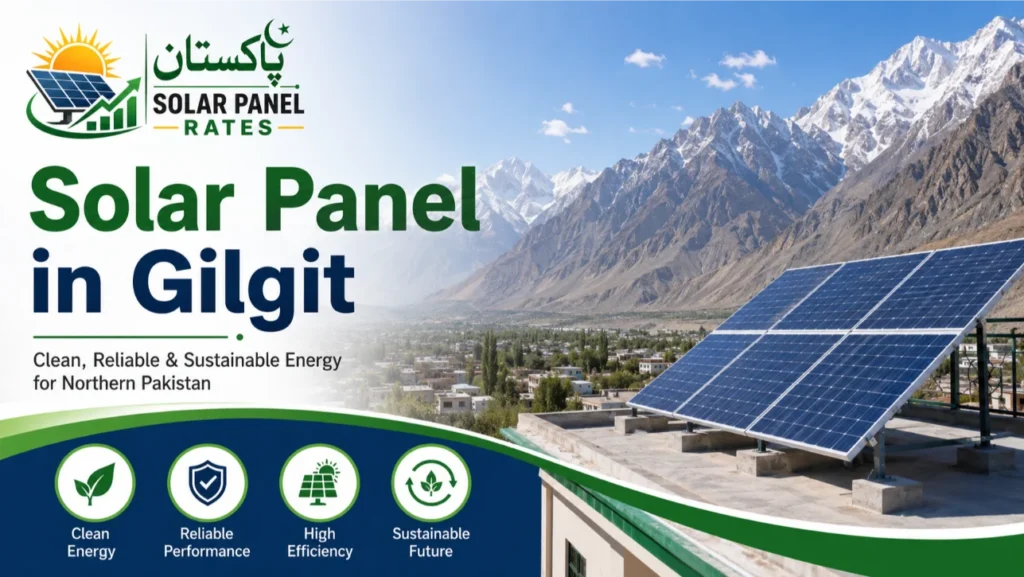
Gilgit, capital of Gilgit-Baltistan, sits at 1,500m elevation in the Karakoram. GBDISCO provides grid power to urban Gilgit but load shedding is severe, and hundreds of remote villages have no grid at all. Solar is not a luxury here — it is the only viable energy source for much of GB. The high-altitude location means stronger solar radiation, giving panels a natural efficiency boost over sea-level cities.
Solar Panel Prices in Gilgit — July 2026
What makes Gilgit different for solar
Gilgit is unlike anywhere else on this site. It sits high in the mountains of Gilgit-Baltistan, and its electricity does not come from a WAPDA distribution company at all — it is supplied by the region’s own Water and Power Department, which runs mostly on small hydropower. That matters because those hydel plants lose output in winter when river flows drop and channels freeze, so Gilgit faces its worst power shortages precisely in the coldest months. For many households here, solar is less about shaving a bill and more about having reliable power when the grid cannot deliver.
The sun itself is excellent in the warm half of the year. At high altitude the air is thin and clear, so summer irradiance is strong and the cool mountain air keeps panels efficient. But winters are long, cold, and short on daylight, with snow that can sit on a poorly angled array. Gilgit gets roughly 4.8 to 5.4 peak sun hours a day averaged over the year, swinging from very strong in summer to weak in deep winter. Any honest Gilgit solar plan is designed around that winter shortfall.
Because the grid is weak, most Gilgit systems are hybrid or off-grid setups with a solid battery, built to store daytime generation for the long, cold evenings.
Where solar is sold in Gilgit
Gilgit’s electrical and solar trade sits around the main bazaars:
- NLI Market and Jamat Khana Bazaar: the central commercial area, with electrical, hardware, and solar dealers.
- Airport Road and Kashrote: retail solar showrooms and suppliers serving nearby homes.
- Main Bazaar and the old trading streets: wholesale electrical goods, wiring, batteries, and accessories.
- Suppliers serving guesthouses and tourism businesses: larger battery and off-grid setups for the hospitality trade.
Equipment choice in the mountains can be narrower and prices a little higher than the plains due to transport. Whatever the quote, check the panel and battery cost against our daily rate tracker, and insist on documented, warrantied gear.
Solar dealers in Gilgit
The dealers below serve Gilgit buyers. Confirm current pricing and stock directly, ask for an itemised written quote, and check credentials before paying any advance.
| Company | Google rating | Area | Phone |
|---|---|---|---|
| Karakoram Renewable Energy Solutions | 4.8 ★ | Main Airport Road, near Park Hotel, Gilgit | 0345 5221100 |
| Gilgit Solar Center | 4.7 ★ | Naya Bazaar, main commercial area, Gilgit | 0312 9701122 |
| Pamir Green Solar Systems | 4.6 ★ | Shahrah-e-Quaid-e-Azam, Jutial, Gilgit | 0346 5112233 |
| Northern Solar Power | 4.6 ★ | Jamat Khana Bazaar, Gilgit | 0355 5123456 |
| GB Renewable Energy Outlet | 4.5 ★ | Kashrote Main Road, Gilgit | 0344 8900111 |
| SkyElectric Gilgit | 4.3 ★ | City Plaza, Main Market, Gilgit | 0800 77759 |
Ratings and contact details as verified on Google. Listed for buyer convenience — we are not affiliated with these companies and take no commission. Confirm credentials and get a written, itemised quote directly with each before you buy.
Installation cost in Gilgit
Gilgit systems lean toward larger batteries and robust, snow-rated mounting, and transport adds a little to equipment cost, so totals run above the plains. The balance-of-system and labour on top of panels, inverter, and battery run roughly:
| Item | Typical Gilgit cost | Notes |
|---|---|---|
| Installation labour | Rs. 9,000 – 16,000 per kW | Mountain access and hybrid/off-grid wiring add to the job |
| Mounting structure | Rs. 12,000 – 22,000 per kW | Steep tilt for low winter sun; rated for snow and wind load |
| DC/AC wiring, DB, breakers, earthing | Rs. 25,000 – 60,000 | Battery and changeover wiring included |
| Battery capacity | Higher than the plains | Larger storage to cover long, cold, low-sun winter evenings |
| Surge protection | Rs. 6,000 – 15,000 | Sensible given mountain storms and unstable supply |
Because storage is central here, budget generously for the battery. A fully installed 5kW hybrid system with a solid lithium battery in Gilgit generally lands above the plains, often between Rs. 900,000 and Rs. 1,150,000 depending on battery size. Use our calculator as a starting point and size storage to your winter needs.
Grid and net metering in Gilgit
Gilgit is not served by a NEPRA distribution company — power comes from the Gilgit-Baltistan Water and Power Department. The national 2026 shift from net metering to net billing applies to NEPRA-regulated DISCOs on the mainland; Gilgit-Baltistan administers its own electricity arrangements separately, and formal grid-tied net metering is limited here. In practice, most Gilgit solar is designed for self-use and backup rather than for exporting surplus to the grid.
If you want a grid-tied arrangement, confirm the current rules and any metering options directly with the GB Water and Power Department before you design the system. For most homes, a hybrid or off-grid setup that stores daytime generation in a battery is the practical choice given the winter shortfall.
Planning your Gilgit system
- Decide whether you want off-grid backup or a grid-tied arrangement, and confirm local options with the GB Water and Power Department.
- Use a licensed installer experienced with mountain, snow, and battery systems.
- Size the battery to your winter evening load, when the grid is weakest.
- Set a steep, snow-rated array and anchor the structure for wind.
- Keep documentation and warranties for all equipment.
Confirm timelines and responsibilities in writing with your installer before work starts.
Recommendations for Gilgit homes
Gilgit’s altitude, cold winters, and weak winter grid point to a distinctive setup:
- Design for winter first. Your grid is weakest and your daylight shortest exactly when you need power most. Size the array and, above all, the battery around winter, not a sunny summer day.
- Go hybrid or off-grid with a solid battery. Storage is the heart of a Gilgit system. A good battery is what carries you through long, cold evenings and grid gaps.
- Set a steep, snow-rated tilt. A steeper angle captures the low winter sun and helps snow slide off; the mounting must stay anchored in mountain wind.
- Use the cool air as an advantage. Thin, clear mountain air and cool temperatures keep panels efficient, so summer output per panel is excellent.
- Right-size by winter load: plan capacity around the appliances and heating you most want to keep running through winter evenings.
Seasonal output and payback in Gilgit
Gilgit’s output swings sharply between a strong summer and a weak deep winter. The figures below are rough planning numbers for a 5kW system locally, and depend heavily on tilt, shading, and snow cover.
| Season | Conditions | Approx. 5kW daily output |
|---|---|---|
| Spring (Mar–May) | Clear, cool, longer days | 23–27 units |
| Summer (Jun–Aug) | Strong high-altitude sun, cool air | 25–28 units (strong output) |
| Autumn (Sep–Nov) | Clear and stable | 22–26 units |
| Winter (Dec–Feb) | Very cold, short days, snow spells | 10–16 units (biggest dip) |
The real value of solar in Gilgit is not a simple bill payback but reliable power when the hydel grid falters in winter, plus strong, cheap generation through the warm months. For a household that relies on solar for backup, the investment often justifies itself in comfort and reliability well before a pure financial payback.
Before you buy solar in Gilgit — quick checklist
- Check today’s panel and battery rates on our live tracker before accepting any dealer quote.
- Design around winter: size the battery to long, cold, low-sun evenings.
- Insist on a steep, snow-rated tilt and a structure anchored for mountain wind.
- Confirm any grid-tied option with the GB Water and Power Department before designing the system.
- Buy documented, warrantied panels and batteries, and get a fully itemised written quote.
- Use an installer experienced with mountain, snow, and battery systems.
Gilgit solar FAQs
Why is winter the key season for solar in Gilgit?
Gilgit’s grid runs mostly on hydropower, which drops in winter as river flows fall, so shortages are worst in the coldest months. That is exactly when solar plus a good battery earns its keep, even though winter output is at its lowest.
Does net metering work in Gilgit?
Gilgit is not on a NEPRA distribution company; it is served by the GB Water and Power Department, which administers its own arrangements. Formal grid-tied net metering is limited here, so most systems are designed for self-use and backup. Confirm current options locally.
Do I need a bigger battery in Gilgit?
Usually yes. With a weak winter grid and short daylight, storage is the heart of a Gilgit system. Size the battery to the winter evening load you most want to keep running.
Does snow stop solar working in Gilgit?
It reduces output while panels are covered, but a steep, snow-rated tilt helps the snow slide off so the panels resume generating. The mounting design matters most.
What does a 5kW hybrid system cost installed in Gilgit?
Often between Rs. 900,000 and Rs. 1,150,000 with a solid lithium battery, above the plains because of larger storage, snow-rated mounting, and transport. Size storage to your winter needs and check equipment against our daily rates.
Sources & references
Tariff, net-metering, and policy details on this page draw on the following official sources. Rates change often, so confirm current figures with the relevant authority or a licensed installer before you decide.
- NEPRA — National Electric Power Regulatory Authority: electricity tariffs and the 2026 shift from net metering to net billing.
- AEDB — Alternative Energy Development Board: solar policy, installer standards, and net-metering guidance.
- Your local distribution company (DISCO) — for example LESCO, K-Electric, IESCO, MEPCO, PESCO or QESCO — for area-specific tariffs and the net-metering application process.