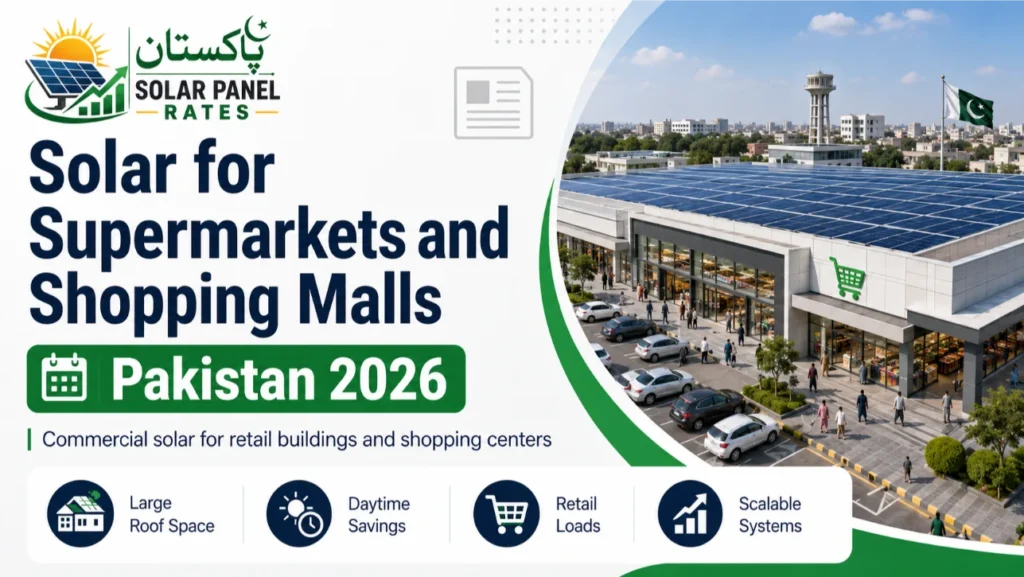
Solar for Supermarkets and Shopping Malls Pakistan 2026
Supermarkets and shopping malls are among Pakistan’s biggest commercial electricity consumers. High lighting loads, HVAC systems, refrigeration, and escalators run 10–14 hours daily. Solar energy offers some of the fastest paybacks in the commercial sector for these businesses.
Why Retail and Mall Solar Makes Sense
- Retail hours (9 AM – 10 PM) overlap almost perfectly with peak solar generation — 80%+ of solar output is directly consumed
- Large flat rooftops provide ideal unshaded installation area — 5,000–50,000+ sq ft available on most malls
- Commercial tariff (C2/C3): Rs 60–80/unit — highest electricity cost category in Pakistan
- Cold chain requirements (refrigeration) mean backup power is essential — hybrid solar eliminates generator costs
- Green retail positioning attracts international brands and sustainability-conscious consumers
- Reduced load shedding disruption means no loss of sales during outages
- Net metering allows overnight exports to grid — earning credit for morning opening hours
- WAPDA/DISCO load-shedding exemptions possible for large commercial consumers with solar
Recommended System Sizes
| Establishment | Typical Load | Recommended System | Monthly Saving |
|---|---|---|---|
| Small supermarket (3,000 sq ft) | 30–50 kW | 30–40kW on-grid | Rs 180,000–280,000 |
| Medium supermarket (10,000 sq ft) | 80–150 kW | 80–120kW hybrid | Rs 480,000–840,000 |
| Large supermarket chain store | 150–300 kW | 150–250kW + battery | Rs 900,000–2,000,000 |
| Small shopping plaza | 200–400 kW | 200–350kW system | Rs 1,200,000–2,800,000 |
| Large mall (50+ stores) | 500kW–2MW | Custom project | Rs 3M–15M+ |
Refrigeration Load — The Key Driver
In supermarkets, refrigeration (cold aisles, freezers, cold rooms) typically accounts for 40–60% of electricity consumption and runs 24/7. For solar to cover refrigeration loads at night, battery storage is essential. A typical medium supermarket needs 50–100kWh of battery to cover overnight cold chain needs.
Sample System — Medium Supermarket (10,000 sq ft)
| Component | Specification | Cost |
|---|---|---|
| Solar Panels | 100kW (167 × 600W) | Rs 2,800,000–3,400,000 |
| Hybrid Inverter | 100kW three-phase | Rs 900,000–1,200,000 |
| Battery Bank | 80kWh LiFePO4 (cold chain) | Rs 1,600,000–2,000,000 |
| Mounting + BOS | Ballasted flat roof system | Rs 600,000–900,000 |
| Net Meter + AEDB | C2/C3 commercial | Rs 80,000–120,000 |
| Labour | Certified EPC | Rs 500,000–750,000 |
| Total | Rs 6,480,000–8,370,000 |
At Rs 700,000/month in electricity savings, a Rs 7 million solar system pays back in 10 months for a medium supermarket on commercial tariff. Few investments in retail offer this kind of return.
Get Commercial Solar Quotes for Your Retail Business
Free site assessment and ROI analysis from AEDB-licensed commercial solar EPC companies.
Sources & references
Tariff, net-metering, and policy details on this page draw on the following official sources. Rates change often, so confirm current figures with the relevant authority or a licensed installer before you decide.
- NEPRA — National Electric Power Regulatory Authority: electricity tariffs and the 2026 shift from net metering to net billing.
- AEDB — Alternative Energy Development Board: solar policy, installer standards, and net-metering guidance.
- Your local distribution company (DISCO) — for example LESCO, K-Electric, IESCO, MEPCO, PESCO or QESCO — for area-specific tariffs and the net-metering application process.