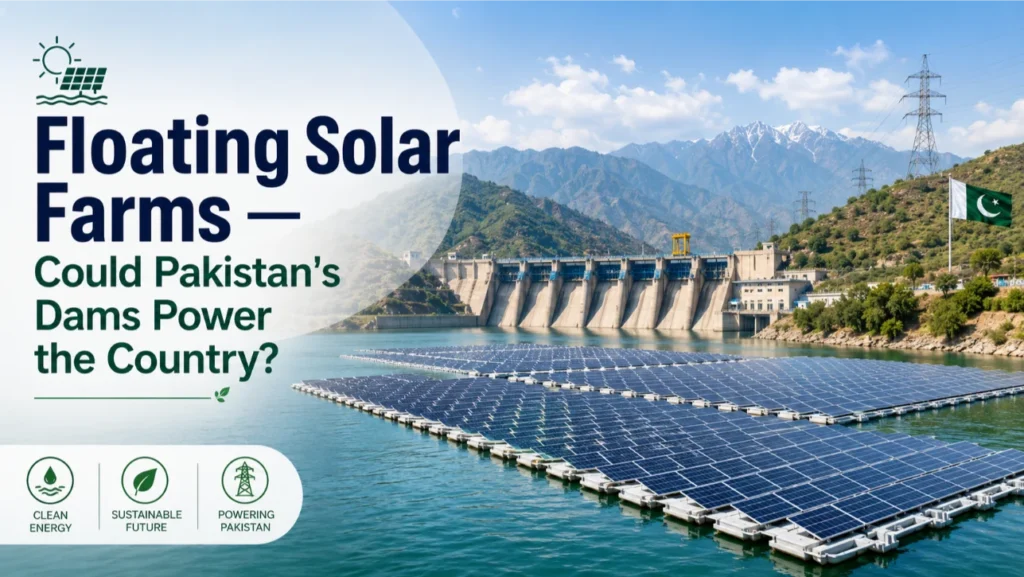
Floating Solar Farms — Could Pakistan’s Dams Power the Country?
How Floating Solar Works
Floating solar systems mount standard solar panels on buoyant platforms (HDPE pontoons) anchored to a water body’s floor. Electrical cables run underwater to an onshore inverter station, and power is fed into the grid. The water surface has no alternative productive use, making floating solar a pure land-use gain. The water surface also cools panels through evaporation, improving efficiency by 5–15% compared to land-based installations.
Pakistan’s Floating Solar Potential
| Dam / Reservoir | Surface Area (km²) | Potential Floating Solar (GW) |
|---|---|---|
| Tarbela Reservoir | ~250 km² | Up to 10 GW (if 10% covered) |
| Mangla Reservoir | ~160 km² | Up to 6 GW |
| Chashma Reservoir | ~75 km² | Up to 3 GW |
| Taunsa Barrage | ~40 km² | Up to 1.5 GW |
| Combined estimate (10% coverage) | — | 20–25 GW potential |
Pakistan’s current total installed power capacity is approximately 45–50 GW (including thermal, hydro, and renewables). Floating solar on just 10% of major reservoir surfaces could add 20–25 GW — transformational scale.
The Hydro-Solar Synergy
Pakistan’s dams generate hydroelectric power — but hydro generation depends on water flow, which peaks in monsoon and drops in winter. Solar generates peak power in summer when hydro may be lower and cooling loads are highest. This hydro-solar complementarity is one of floating solar’s most compelling advantages at Pakistan’s dams:
- Existing grid infrastructure at dam sites reduces connection costs significantly
- Floating panels reduce water evaporation by 25–35% — preserving water storage in drought conditions
- Solar and hydro complement each other seasonally — solar peaks in summer, hydro peaks in monsoon
- Existing dam sites have land for inverter stations, control rooms, and maintenance facilities
Global Floating Solar Context
China has the world’s largest floating solar installations — the 1.5GW Dezhou Dingzhuang project (2023) and multiple 100MW+ systems on coal mining subsidence ponds. India has the 600MW Ramagundam floating solar project in Telangana. South Korea has deployed floating solar on irrigation reservoirs nationwide. Global floating solar capacity exceeded 20GW in 2025.
Pakistan’s Floating Solar Status (2026)
Pakistan has no large-scale floating solar installations as of 2026. Feasibility studies have been conducted by WAPDA on Tarbela and Mangla, and CPEC has identified floating solar as a potential addition to hydroelectric dam upgrades. The first pilot projects are likely to be small-scale (10–50MW) demonstration installations in the 2026–2028 period.
Frequently Asked Questions
⚡ Today’s solar solutions for Pakistan — available now
Sources & references
Tariff, net-metering, and policy details on this page draw on the following official sources. Rates change often, so confirm current figures with the relevant authority or a licensed installer before you decide.
- NEPRA — National Electric Power Regulatory Authority: electricity tariffs and the 2026 shift from net metering to net billing.
- AEDB — Alternative Energy Development Board: solar policy, installer standards, and net-metering guidance.
- Your local distribution company (DISCO) — for example LESCO, K-Electric, IESCO, MEPCO, PESCO or QESCO — for area-specific tariffs and the net-metering application process.