Hybrid Solar System for Load Shedding in Pakistan 2026 — Complete Buyer’s Guide
Load shedding in Pakistan ranges from 6–14 hours per day in many cities in 2026. Generators are noisy, expensive to run (Rs 150–250/hour in fuel), and produce pollution. A hybrid solar system with LiFePO4 batteries is the permanent solution — generating free electricity during the day, storing it in batteries, and running your home silently during outages.
How a Hybrid Solar System Solves Load Shedding
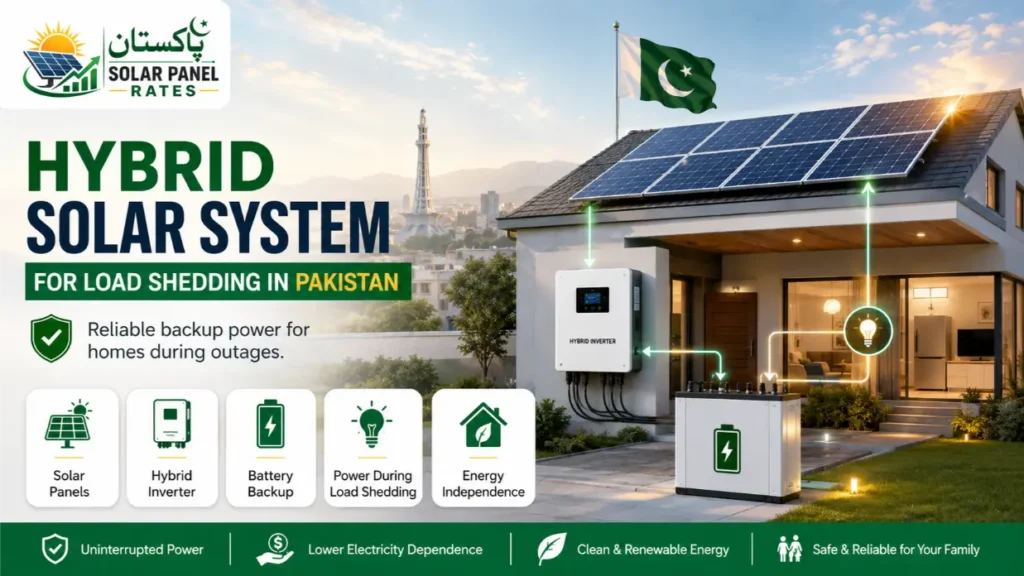
A hybrid solar system works in three modes simultaneously:
- Solar generation mode (daytime) — Panels power your home directly. Excess goes to charge the batteries.
- Battery backup mode (outages) — When the grid goes off, the inverter switches to battery power in under 20 milliseconds — so fast your appliances don’t even notice.
- Grid export mode (when batteries are full) — If batteries are fully charged and solar is still generating, excess is exported to the grid under net metering — earning you credits.
How Many Hours of Backup Does a Hybrid System Give?
| Battery Size | Typical Load | Backup Hours |
|---|---|---|
| 5kWh (1× LiFePO4) | Fans + lights + TV (500W) | 8–10 hours |
| 5kWh (1× LiFePO4) | + Refrigerator (700W avg) | 5–7 hours |
| 10kWh (2× LiFePO4) | Fans + lights + TV + fridge | 10–14 hours |
| 10kWh (2× LiFePO4) | + 1× 1-ton AC inverter | 5–8 hours |
| 15kWh (3× LiFePO4) | Full home load (1.5–2kW) | 8–10 hours |
| 20kWh (4× LiFePO4) | Full home load (1.5–2kW) | 12–14 hours |
Hybrid vs Generator vs UPS — Which is Best?
| Factor | Hybrid Solar | Generator | UPS (Lead Acid) |
|---|---|---|---|
| Running cost | Free (solar powered) | Rs 150–250/hour fuel | Electricity cost to charge |
| Noise level | Silent | Very loud | Silent |
| Backup duration | 8–14+ hours | Unlimited (with fuel) | 2–4 hours max |
| Pollution | Zero | Fumes + CO2 | Minimal |
| Upfront cost (5kW) | Rs 7.6–9.4 lakh | Rs 2–5 lakh | Rs 80,000–150,000 |
| 10-year running cost | Near zero | Rs 15–30 lakh (fuel) | Rs 3–6 lakh (batteries) |
| Pays for itself? | Yes (2–3 years) | Never | Partially |
Recommended Hybrid System by Load Shedding Hours
| Daily Load Shedding | Recommended System | Estimated Cost |
|---|---|---|
| 4–6 hours/day | 5kW hybrid + 5kWh battery (1× LiFePO4) | Rs 6.7–8.2 lakh |
| 6–10 hours/day | 5kW hybrid + 10kWh battery (2× LiFePO4) | Rs 7.6–9.4 lakh |
| 10–14 hours/day | 6–8kW hybrid + 15kWh battery (3× LiFePO4) | Rs 11–14 lakh |
| Round-the-clock backup needed | 8–10kW hybrid + 20kWh battery (4× LiFePO4) | Rs 14–18 lakh |
Best Hybrid Inverters for Load Shedding in Pakistan
- Growatt SPH Series — Most popular, switches in under 10ms during outages. Supports all LiFePO4 brands. Rs 95,000–195,000.
- Huawei SUN2000 — 20ms switchover, AI-optimized battery management. Requires Huawei LUNA2000 battery. Rs 145,000–330,000.
- Solis S6 Hybrid — Excellent switchover time, wide battery support. Rs 110,000–240,000.
- Fronus PV Hybrid — Budget option, good for smaller homes, instant switchover. Rs 55,000–90,000.
💡 Pro Tip: If your load shedding schedule is predictable (e.g., 8am–2pm and 6pm–midnight), a 10kWh battery is enough for most households. For unpredictable outages, size up to 15–20kWh for peace of mind.
Frequently Asked Questions
❓ Can a hybrid solar system run an AC during load shedding?
Yes, but it reduces backup duration significantly. A 1.5-ton inverter AC draws approximately 1,000–1,200W. With a 10kWh battery, running AC during load shedding gives 5–8 hours of backup. For all-day AC during load shedding, size the battery bank to 15–20kWh.
❓ Is a hybrid solar system better than a generator in Pakistan?
Yes, for most households. A hybrid system eliminates recurring fuel costs (Rs 15,000–25,000/month for heavy generator use), is completely silent, produces no pollution, and pays for itself in 2–3 years. Generators only make sense for very occasional use or as a backup during extended cloudy periods.
❓ How quickly does a hybrid solar system recharge its batteries?
A 10kWh LiFePO4 battery bank paired with a 5kW system takes approximately 2–3 hours to recharge from 20% to 100% during peak sun hours (10am–3pm). Even after a full night of backup, your batteries are fully recharged by noon the next day.
Ready to end load shedding permanently?
See our 5kW Hybrid System Guide, Battery Price Page, and compare our system types explained.
Sources & references
Tariff, net-metering, and policy details on this page draw on the following official sources. Rates change often, so confirm current figures with the relevant authority or a licensed installer before you decide.
- NEPRA — National Electric Power Regulatory Authority: electricity tariffs and the 2026 shift from net metering to net billing.
- AEDB — Alternative Energy Development Board: solar policy, installer standards, and net-metering guidance.
- Your local distribution company (DISCO) — for example LESCO, K-Electric, IESCO, MEPCO, PESCO or QESCO — for area-specific tariffs and the net-metering application process.